100 years of Stolk Brothers
A brand‑new office, greenhouses filled with stunning Anthuriums, and a warm welcome: visitors to Stolk Brothers immediately experience the generations of craftsmanship that the company embodies. Recently, they celebrated their 100th anniversary — an important milestone and the perfect moment to learn more about this wonderful business. Over a cup of coffee, we speak with David and Pieter Stolk about their history, developments, and vision for the future.
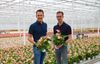
Can you itroduce yourselves?
Pieter: “I’m the oldest of the two of us. I studied history in Leiden, something I’m still very interested in. It teaches you to look at the world through a different lens. I started working here in 2012. I actually rolled into it quite naturally. I needed a job and just got started. I trained as a cultivation manager and now focus on production and energy.”
David: “As a child, I dreamed of becoming a grower. The agricultural sector fascinated me enormously. I studied at the IVA in Driebergen, a programme focused on entrepreneurship with an emphasis on the automotive trade. When I graduated, someone left my father’s company and I took over his sales role. That was in 2006. As a student, I already worked here a lot, so I knew the company well. We’ve worked through all facets of the business and understand every step in the production process.”
What is the history of Stolk Brothers?
Pieter: “Our great‑grandfather started in 1925 growing lettuce and later cucumbers. Our grandfather built the first greenhouse and switched to tomatoes. After that, our uncle Pieter and our father Kees took over and moved into potted plants. The development went from vegetables to ornamental plants, with a clear choice for green plants and eventually Anthuriums. That transition began in 1989, and we immediately won an award for the most beautiful Anthurium. And in 1993 we placed our first order with Anthura.”
David: “Another important moment in our history was in 1992, when we started using biological crop protection. At that time, it was far from common practice. The reason was personal: our father had severe eczema, which especially flared up after spraying chemical agents. That made us think. We saw how harmful those substances could be.”
Pieter: “It’s important to realise that biological protection isn’t always the easiest route. Those last few percentage points of pest control are often the hardest. The chain doesn’t accept any damage to plants, so the pressure to deliver perfection is high. But that’s exactly why we’re proud that we took this step so early. It helped us follow a sustainable course, and it fits with our responsibility as a family business.”
David: “Biological protection is now woven into our operations. It’s not just a technique, but a philosophy. We involve our employees in these processes, make sure it’s workable for everyone, and continue looking for ways to further improve it.”
Can you tell us something about recent developments?
David: “A few years ago, we had the opportunity to take over a neighbour’s greenhouse. That was the moment to expand. We installed a concrete floor and converted the front section into a table nursery for the smaller pot sizes. Everything is now located in one place, which makes the work more organised and more efficient.”
Pieter: “We always grow step by step, in a healthy way. That fits our vision. Through our focus on sustainability and quality, we have remained attractive to customers. That has helped us to gradually expand.”
What do you produce at the moment?
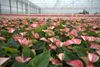
David: “We only work with Anthura varieties and really try to differentiate ourselves in the market. In addition to the basic colours such as red, white and pink, we offer more exclusive varieties like Livium®. This allows us to offer our customers a broad and distinctive range.”
Pieter: “We always focus on the best quality, and we also want to offer a complete concept. That’s why we sell ceramics that match our plants. We’ve been doing that for years, and the demand for ready‑made products is growing. Customers want convenience, and we’re happy to respond to that.”
Wat vinden jullie het mooiste aan jullie werk?
David: “Wat mij het meeste voldoening geeft, is dat we onze ideeën echt kunnen realiseren. Pieter en ik zitten op één lijn en dat werkt heel prettig. En als ik ergens in Nederland onze planten zie, of het nu in winkels of bij mensen thuis is, dan voel ik trots. Het is bijzonder om te zien hoe iets dat hier groeit, een plek krijgt in het dagelijks leven van anderen.”
Pieter: “Voor mij zit het geluk in het optimaliseren van processen. We werken met veel verschillende rassen en potmaten, en het is een mooie uitdaging om die puzzel kloppend te krijgen. Ook de inzet van biologische beschermingsmiddelen geeft me energie, zeker als het goed werkt. We betrekken daarnaast ons team actief bij alle ontwikkelingen, en dat zorgt voor betrokkenheid en werkplezier.”
What are you the most proud of?
David: “What gives me the most satisfaction is that we can truly bring our ideas to life. Pieter and I are on the same wavelength, and that works very pleasantly. And whenever I see our plants somewhere in the Netherlands, whether in shops or in people’s homes, I feel proud. It’s special to see how something that grows here finds a place in the daily lives of others.”
Pieter: “For me, the joy lies in optimising processes. We work with many different varieties and pot sizes, and it’s a great challenge to make that puzzle fit perfectly. The use of biological crop protection also gives me energy, especially when it works well. We also actively involve our team in all developments, and that creates engagement and job satisfaction.”
How do you foresee the future?
David: “We want to stay relevant by continuously developing and innovating. We do that step by step, with attention to quality and to what our customers consider important. We invest in an assortment that is not only beautiful, but also practical and as sustainable as possible. The demand for user‑friendly and long‑lasting products is growing, and we aim to respond to that in a careful way.”
Pieter: “Innovation helps us with that. For example, we are working on drone projects that photograph and monitor the plants. This makes it possible to respond even better to what the plants need. We are also working together with Anthura on varieties that are more resistant to diseases and pests. That is a challenge, but also an opportunity to make cultivation even more sustainable and to make the work more pleasant for our people.”
David: “The collaboration with Anthura is very valuable in this. Over the years we have built an open and respectful relationship in which we can share our ideas and concerns. Even when contact persons changed, communication remained pleasant and constructive. It’s great to see that we can build a future‑proof assortment together.”