30 Years of Collaboration: De Plantis and Anthura
A partnership that has proven its value for thirty years. This year, De Plantis and Anthura celebrate a special milestone: three decades of working together to deliver the most beautiful flowering products for the Italian market. Much has changed during that time, but one thing has always remained the same: mutual trust and a shared commitment to quality.
Plenty of reason to reflect on this anniversary. We sat down with De Plantis to talk about the beginning of the collaboration, how the landscape has evolved over the years, and of course, what the future holds.
Could you introduce yourselves?
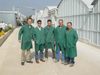
De Plantis was founded in 1995 and today consists of a close knit team of five colleagues. We operate from Pompeii, an area known for its rich agriculture and mild climate. Thanks to the fertile soil, many different crops grow here, making it an ideal environment for our work.
Our team works partly in the field and partly in the office. Nicola and Giovanni visit growers daily and stay very close to the practical realities of cultivation. Francesco is responsible for logistics, while Nunzia and Ida handle all communication and support from the office in Pompeii, ensuring that we always head into the field with the right information. All of us have lived in the area for many years and know the region inside out. The headquarters is located right in the heart of the most important cut flower production area, making it a logical and strong base for our activities.
How would you describe the role of De Plantis in the Italian floriculture sector?
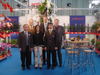
Knowledge development is central to De Plantis. We continuously invest in training, both in Italy and abroad. We also regularly visit the Netherlands to stay updated on new innovations and techniques. Our academic background helps, but above all it is the willingness to keep learning that sets us apart from other agents.
We also visit many growers, including those in the Netherlands. By literally being inside the greenhouses, we understand exactly what is happening and which developments are coming. We follow this same approach in other countries and for other crops. Everyone within the team has their own expertise, which we actively share with one another. This keeps our knowledge broad and up to date.
De Plantis has a lot of knowledge in house. How do you ensure that this knowledge stays up to date within the organization?
Knowledge development is central to De Plantis. We continuously invest in training, both in Italy and abroad. We also regularly visit the Netherlands to stay updated on new innovations and techniques. Our academic background helps, but above all it is the willingness to keep learning that sets us apart from other agents.
We also visit many growers, including those in the Netherlands. By literally being inside the greenhouses, we understand exactly what is happening and which developments are coming. We follow this same approach in other countries and for other crops. Everyone within the team has their own expertise, which we actively share with one another. This keeps our knowledge broad and up to date.
Which moments or milestones best capture the evolution of De Plantis?
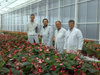
Looking back at thirty years of De Plantis, one moment truly stands out: the decision to collaborate with Dutch companies in floriculture. In 1995, we started working with Anthura, thanks to the connection with Marco van Herk, who was an account manager at the time. The Netherlands was then the center of innovation in floriculture, with the best crops and the most advanced techniques. This collaboration gave us an enormous boost. It brought new knowledge, new products, and new opportunities, and laid the foundation for where we are today.
In the years that followed, the market changed significantly. Traditional Italian crops came under pressure, partly due to challenges related to soil sterilization. This forced us to look ahead. We shifted to innovative cultivation methods, something we have built considerable expertise in by now. That transition was an important turning point in our development.
How has the Italian sector developed, and how has De Plantis responded?
In recent decades, the Italian floriculture sector has made significant progress. Where the market once depended heavily on imports from abroad, Italy is now an important player within Europe. Growers have become more professional, have organized themselves in collaborations and cooperatives, and have become more selective about quality. This has resulted in a more stable market position and more export opportunities.
For De Plantis, this mainly meant looking ahead. New cultivation systems, such as hydroponics, became increasingly important, as did technological innovations that help growers improve their processes. We actively embraced these developments and adjusted our knowledge accordingly, enabling us to guide growers through this transition. Through close contact with growers, both in Italy and abroad, we have been able to bring technique and practice closer together.
What were the biggest challenges in these three decades, and what have they taught you as a company?
One of the toughest moments was the loss of our co-founder Tommaso, eight years ago. It affected us personally and professionally. Yet the team did not fall apart. We reorganized ourselves and created space for the younger generation to take on more responsibility. Their ambition and energy helped move the company forward. In the years after that reorganization, the business is growing. It taught us how important resilience, trust, and collaboration are. It is in difficult times that you see what a team is truly capable of.
What do growers need to build a future proof and resilient cultivation system?
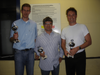
Above all, the willingness to keep innovating. Becoming future proof is never about a single innovation, but about the bigger picture: the entire sector must become more sustainable and more professional. Companies need to organize themselves and collaborate more actively with others. We help growers with this, for instance by connecting them and building cooperation structures. This is especially essential for smaller businesses.
Climate change plays a major role in Southern Europe: heavier storms, higher temperatures. This requires adjustments in greenhouses and growing systems. Ten years ago, sustainability was hardly a topic; in the past five years, it has accelerated enormously.
Growers also want to invest, innovate, and broaden their assortment. The most successful growers are the ones with courage: the courage to invest, to change their business structure, and to try new crops.
We also see more young people entering the sector. Even though the number of companies is decreasing, the number of young entrepreneurs has risen by eighteen percent. That gives confidence for the future.
You have represented Anthura for thirty years. What makes this collaboration so special?
Working with Anthura feels natural and easy. We share information, build knowledge together, and grow as a result. By working together so intensively for so many years, you really get to know each other. You can spend hours together in the car, discover new cities, and have personal conversations. This creates a strong bond and human connection. And that applies on every level: from management to account managers. Trust, openness, and engagement are what make it possible for us to work together with the same energy after thirty years.
What ambitions do you have for the coming years?
We want to continue investing in innovative cultivation knowledge so we can support customers even better and further optimize production. Marketing also plays an important role. Anthura has a strong marketing department, and in Italy this is less developed. There is a lot of potential there. More promotion helps growers reach new markets and continue to grow.
We also want to serve more countries with Italian production. Cut anthurium is often associated with funerals, while the flower is extremely versatile and works beautifully for wedding decorations, among others. With the right marketing, we can shift and strengthen that position.
Anthura invests a lot, and to maintain that level we need to continue delivering at the same high standard. Anthura is seen as the market leader, and that is a position we want to preserve together.