Florance Flora's transition to wick cultivation
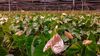
Florance Flora has been a prominent name in India’s horticulture sector for over 40 years. The company, which started small, initially focused on cut flowers but gradually transitioned to potted plants—a move that proved critical during the COVID-19 pandemic. Over the decades, Florance Flora has cultivated strong partnerships that have played a vital role in its growth, such as its long-standing collaboration with Anthura. Today, they’re proud to be the largest supplier of Anthurium plants in India, with production spanning over 75 acres of protected cultivation in greenhouses.

In addition to being the largest grower of Anthurium, Florance Flora also maintains strong relationships with retailers such as Ikea. Besides cultivation, they play a crucial role in the distribution of Anthura's young plants (Anthurium pot, cut flowers, and Phalaenopsis). Thanks to Florance Flora's extensive network, Anthura's young plants are distributed nationwide, enabling other growers to succeed with these products.
Recently, Florance Flora took a new step by adopting wick cultivation, a system designed to optimise water and nutrient use. A great innovation, which well reflects the progressive nature of Florance Flora. We spoke to owner Rownak Gutgutia about their experience with this system, the challenges they faced, and the benefits they’ve seen so far.
Starting with wick cultivation
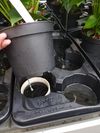
The decision to shift to wicks began about a year ago, when experts from Anthura reintroduced the idea to the team at Florance Flora. Initially, it was something they hadn’t prioritised, but facing growing water scarcity and the importance of sustainability, it became clear they needed a more efficient solution. The previous irrigation system relied on hose pipes, which consumed a lot of time and wasted tremendous amounts of water. After months of consideration, Rownak collaborated with local suppliers to create trays and sourced wicks from China. Within six months, they had completely transitioned the potted Anthuriums to wicks.
"We weren’t entirely sure how Anthuriums would respond, as their roots are sensitive to water," Rownak tells us, "but the results surprised us. Anthuriums actually thrive with this method, as the plants take up only the moisture they need."

The transition process
The switch to wick cultivation wasn’t without its hurdles. The team found that installing the wicks was initially labour-intensive, and the trays used at the start were prone to breaking. However, Rownak soon replaced these with sturdier trays that could be reused, making the system even more sustainable.
There was also a significant upfront investment required for the trays and wicks. While this might be challenging for smaller growers, Florance Flora emphasised that the long-term benefits—like water savings and reduced labour—outweigh these costs. One of the team’s main goals moving forward is to mechanise the wick installation process, which would make adoption easier and more efficient.
The benefits of wick cultivation
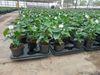
Since implementing the system, Florance Flora has seen remarkable improvements. Water consumption has been halved, and fertiliser use has decreased, as the nutrients remain in the trays and are absorbed directly by the plants. This has also eliminated water waste entirely. The system has led to healthier plants with better root systems, larger flowers, and more consistent growth. Spacing between pots, ensured by the trays, prevents overcrowding—a critical factor for Anthurium growth.
"We’ve even started using the system for mother plants and plan to extend it to all our product groups. By the end of 2026, we aim to completely eliminate overhead watering and reduce water waste to zero."
Another notable advantage of the wick system is the substantial reduction in manual labour. The traditional irrigation method required constant monitoring and manual watering, which was both time-consuming and labour-intensive. With the new system, plants automatically draw the exact amount of water they need, significantly reducing the need for manual intervention. This frees workers to focus on other essential tasks, improving overall efficiency and productivity.
Lessons for the next generation of growers
When asked if Rownak had advice for others considering the system, he suggested starting small. "Try it with a limited batch and observe the results before scaling up. Be mindful of using less soil; too much soil can hinder water absorption and lead to waste." Rownak emphasised that the system is straightforward and highly effective in saving water, nutrients, and labour. "There’s no reason not to try it. In an industry where resource efficiency is becoming increasingly important, this is a step in the right direction."
Florance Flora’s journey with wick cultivation highlights the tangible benefits of combining innovation with sustainable practices. By reimagining traditional methods, they have not only improved resource efficiency but also demonstrated that adapting to change can lead to significant progress.