How Anthura controls Anthurium thrips
Anthurium thrips (Chaetanaphothrips orchidii) pose a significant challenge for Anthurium growers. Along with western flower thrips (Frankliniella occidentalis), poinsettia thrips (Echinothrips americanus) and tobacco thrips (Thrips parvispinus), these tiny insects can cause considerable damage to plants. Their piercing-sucking mouthparts stunt growth and cause corking of stems, leading to discolouration of leaves and flowers. Damage often appears as corky streaks and silvery patches on foliage and blooms.
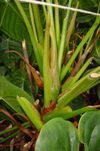
At Anthura, we are committed to sustainable solutions. We use biocontrol agents of natural origin to effectively manage Anthurium thrips. These biocontrol agents not only control pests effectively but also contribute to more sustainable cultivation practices. To learn more about effective thrips control, we spoke with Nick van den Berg, head of cultivation, and Marco van Adrichem (photo), cultivation specialist at Anthura. They share their insights on how to control this persistent pest.
Biological control
At Anthura, we adopt an integrated approach to controlling the spread of Anthurium thrips. Marco van Adrichem explains, “The first step involves maintaining strict hygiene measures. For example, growers wear protective clothing when moving between greenhouse sections to prevent the spread of diseases and pests, and there is strict monitoring of who enters the greenhouses.
“In addition, we tackle thrips using a carefully selected combination of biocontrol agents, including macrobiological (beneficial insects) and microbiological (fungi) methods. Insect-pathogenic fungi, nematodes, soil predatory mites and foliar predatory mites are deployed together for a comprehensive attack on thrips.”
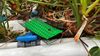
The pupal stage of thrips is targeted with a well-considered combination of fungi. Nick van den Berg notes, “This cocktail of fungi is applied manually with a hosepipe and, on a larger scale, through a spraying nozzle system, which brings the fungi closer to the cultivation substrate — where their effect is greatest.”
Insect-pathogenic fungi are also applied using the low-volume method (LVM).
The combination of these biocontrol agents plays a crucial role in reducing thrips numbers. Although chemical agents are still used occasionally, our ambition is to transition to an almost entirely biological approach by 2027. Achieving this will require further research and development to operate effectively without chemical agents. When we do use crop protection agents, we ensure the crop is open, so the spray can penetrate thoroughly and work effectively.
Research and collaboration
To enhance knowledge and effectiveness of biological control methods, we collaborate with Wageningen University & Research (WUR), Delphy and various growers and propagators. This research focuses on the proactive use of biocontrol agents and the collection of data on preventive control.
Marco says a key aspect is identifying factors that improve the efficacy of biocontrol agents without benefitting the thrips: “Nematodes need moisture to survive and function, but higher humidity can also favour thrips. Finding the right balance is therefore crucial for successful thrips control.”
Preventive measures and climate factors
Growers can significantly reduce the risk of thrips infestation by taking seasonal influences into account. During the winter period, it is important to lay the foundation for a thrips-free greenhouse environment in spring by using biocontrol agents year-round. This considerably lowers overall thrips numbers. Preventive planning and action are critical, as chemical control agents are often applied only when visible damage occurs — by which time it is already too late for biological control.
Cuttings also attract Anthurium thrips, so we ensure that excess cuttings are removed promptly. This season, alongside our regular sticky traps for thrips monitoring, we have also introduced traps placed on the substrate. We see potential in this method for earlier detection of thrips proliferation.
Nick concludes, “Effectively controlling Anthurium thrips remains a challenge. However, by combining hygiene measures, biocontrol agents and collaboration with research institutions, we are working towards sustainable solutions. Ongoing development and implementation of these methods will hopefully lead to effective management of this pest without relying on the use of chemical agents.”