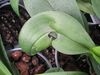
Physiological disorders Phalaenopsis – temperature damage
Previous time, we wrote about the occurrence of physiological disorders that are visible on flower stems and/or the flowers. This time, we focus on physiological disorders that appear on the leaves. By far the most damage is caused by temperature, this can be either too low or too high. In addition, light contributes to the warming of a leaf through radiation, which can cause leaves to overheat.
Here, we discuss the most common symptoms on the leaf caused by either too much cold or too much heat.
Cold
When the greenhouse temperature and therefore the leaf temperature drops, all processes in the leaf slow down. This includes the transport of water, nutrients and assimilates, as well as photosynthesis and the uptake, storage and release of CO₂. Because these processes come to a standstill, waste products or intermediate substances begin to accumulate in the leaf, which leads to problems.
Symptoms that occur as a result of temperatures that are too low include:
- cold or cooling damage;
- extreme reddening of the leaf or leaf tips;
- damage along the leaf edges.

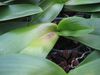
Cold- or cooling damage
This type of damage to the leaves occurs as a direct result of a temperature that is too low. We speak of cooling damage when it occurs during the cooling phase in which the flower spikes are induced. Cold damage refers to the damage that develops during the transport of, for example, young plants or plants on their way to the final customer. In general, a Phalaenopsis always requires a temperature of 16 to 17°C or higher. At a lower plant temperature, the risk of damage increases significantly. When cold damage occurs, it is often the lower leaves that show symptoms. This is logical, as these parts of the plant warm up the least during the day.
Temperature compensation
The extent to which actual damage occurs in a Phalaenopsis depends on several factors:
- the variety;
- the temperature;
- the amount of time the temperature remains below the critical threshold;
- the average daily temperature.
There are large differences between varieties when it comes to sensitivity to temperature. In addition, the temperature throughout the day is also important, meaning the average over twenty‑four hours. For example, if the temperature drops to 16°C at night and rises to only 19°C during the day, significant leaf damage can be expected. But if the daytime temperature reaches 25°C with the same night temperature, there is usually no problem.
Heat and light
Damage to the plant caused by heat or light is discussed under the same heading, because light damage is in fact also heat damage. Light, in most cases radiation from the sun, warms up the plants.
Plants function well up to a plant temperature of about 30 to 35°C. Above an air temperature of about 30°C, growth begins to slow because not all plant processes function optimally anymore. When the temperature rises above 40°C, plants enter serious stress and multiple processes fail at the same time. The plant is not immediately dead, but it is in a critical zone.
1. Enzymes and proteins become damaged
- Many enzymes that regulate photosynthesis and growth begin to denature at these temperatures. As a result, essential processes slow down or stop.
2. Photosynthesis collapses
- The system that converts light into energy becomes disrupted;
- Chloroplasts become damaged. The plant produces fewer sugars, which leads to less energy.
3. Extreme evaporation (water stress)
- Plants lose water quickly through the stomata;
- To prevent dehydration, they close them, which results in:
- less CO₂ uptake;
- further reduction of photosynthesis.
4. Damage to cell membranes
- High heat makes cell membranes unstable and leaky;
- Substances that belong inside the cell are lost, leading to cell damage or cell death.
5. Leaf burn
- Direct sunlight combined with heat can cause leaf burn, visible as brown, dry patches.
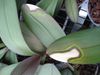
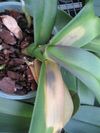
Red colouring of the leaf and the appearance of leaf edges or red leaf tips
When the plant experiences stress, the green pigment (chlorophyll) in the leaf disappears. Other pigments become visible or are produced instead. These include carotenoids, which give yellow and orange colours and were already present, and anthocyanins, which give red and purple colours and are often newly formed. The latter are produced because they help protect the plant against light and cold. This prevents further damage. During stress, sugars accumulate in the leaf, which stimulates the production of anthocyanins. When the stress factors disappear, the plant can usually recover. The green colour gradually returns because the amount of carotenoids and anthocyanins decreases and the chlorophyll increases again.

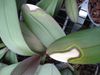
In some varieties, heat disrupts leaf development. This results in a leaf that emerges deformed from the sheath of the plant. The leaf has been stuck inside the sheath, and the damaged sides become corky. See photos.